Wednesday, March 25, 2020

Quiet solitude of Capilano River Regional Park's Cleveland Dam before Covid-19


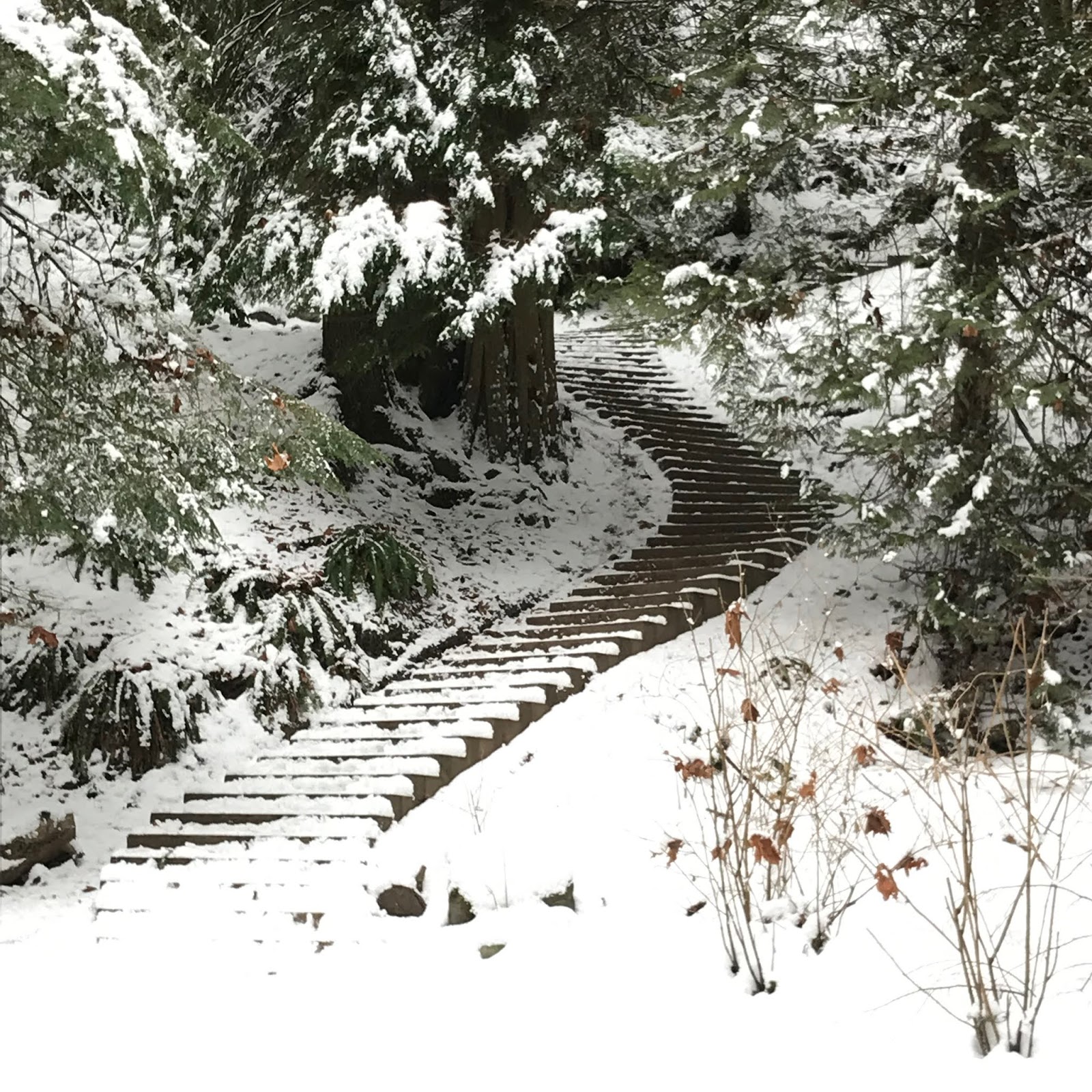
.... This summer, fall, when the tourists flock to the North Shore once again, I'm going to haul my modified seven foot high step-ladder (with railings)(on wheels) out onto Cleveland Dam's north side road (Capilano River Metro Regional Park) and sell tickets to photographers so they can shoot over the dam's chain link fence to capture the Lions and the reservoir because right now, and from 1954, its been like this.

Typical Tourist positioning because ---->
Viewing portal has now been doubled in frequency to 4

Through the 'window' 2020-03-27 Two Eagles today, not their usual perch


Just a Walk in the Park


All photos: iPhone 7


Taking a step or two back from the dam's edge


************************************************************

Photos should look like this with the Lions in the background
City of Vancouver Archives

Sunday, March 22, 2020

Cramming "Life at the time of the coronavirus" into a freezer


Bonnie called the other day:

"Mena! We are going to buy some frozen blueberries, from Warkentin (Blueberries) Organic Farm where we get the fresh ones in the summer. Would you like some?"

"Hmm, blueberries, I love blueberries, and I have only a small bag left in the freezer.   Yes, of course! Bonnie, how big are the packages?"

"Well, they sell boxes, 30 pounds each"

"30 pounds? How big is 30 pounds? Will it fit in my freezer?"

"We are getting three boxes for us, and if you want we could split a fourth one with you."

"Hmm, no, it's fine, I will get a whole box and split it with Celestina."

A clear answer, haunted as I am by the fear of missing out on blueberries.


Celestina went to Bonnie's house this afternoon and called me when she was fifteen minutes away from my place. 

"Mum, the box is big and we don't have any room in our freezer. Do you have room in yours?"

"I will try to make room. I'll give you the full bag of frozen ones I have and try to fit the box in."

A knock at the door signals that my daughter has arrived. I open the door: Celestina is standing five metres (not TWO) away from my door, the box is right at my feet, an enormous box that I don't dare touching both to avoid hurting my back, but es-pe-ci-al-ly because Celestina has touched it, and her kids had a running nose ten days ago, and it might have been, who knows, it might have been coronavirus that they had, and if it was that, I might get it, and if I get it, I might die, and so, to exorcise my dying, Celestina doesn't want me to be closer than five metres from where she is.

"Wait, I will give you the bag of the frozen blueberries."

I go to the freezer, come back with this bag, put it on the hallway, back up 5 metres, she approaches, takes the bag, leaves. I push with my feet the heavy box inside the condo, I go to the kitchen, get thick gloves, exercise my muscles, lift the little monster and put it to the counter.  How the hell am I going to fit this box in my freezer? I can't even scratch my head to find an answer, because now I have to wash the gloves right away, to avoid that some viruses from the box, from Celestina's hands that touched her son's running nose ten days ago, might find the way to my lungs, even though during all this time Celestina has probably washed her hands two thousand three hundred and forty five times.

I wash my gloves, I wash my hands carefully, for 40 seconds to be extra careful, put the gloves back, open the box, open the blue bag inside the box and the ocean of frozen blueberries has a toll on me. Thirty pounds, oh my, they look like thirty tons.

I open the freezer, a tiny, sleek freezer that belongs to the skinniest smallest fridge available in North America. In normal times my freezer is empty and receiving. In normal times, when I go grocery shopping and then my fridge becomes one fifth full, (which I consider as extremely full), the mere act of opening the door fridge and seeing it one fifth full gives me palpitations, as I am a minimalist at heart, liver, kidneys, feet and all the rest. But at this coronavirus time even though my fridge is relatively manageable, my freezer is full. Or almost. I bought some spot prawns yesterday. Spot prawns, which I bought only another time in my 71 years of life. What am I going to do with 40 and some prawns if I cannot invite anybody and I eat two prawns every eighteen months? I have two loaves of bread in the freezer, and a lasagna I made, and bags of soup I made and chickpeas I made and tomato sauce I made. Why? Why? Why? All this cooked food? What happened to my mental sanity? Is the fear of coronavirus giving insatiable hunger? I am desperate, I start loading my fridge with the bags of soup - that will be my diet for the next seven days, with one loaf of bread, with the frozen escarole. And start frantically looking for freezer bags in the kitchen drawers.  Nope, I only have tiny sandwich bags. Of course, I never need freezer bags, except for the summer, when I freeze blueberries. And now it's spring. And the blueberries are already frozen. And they are waiting for their rightful place in my freezer.

I could go to the store and buy some bags. Yeah. By the time I go and push the elevator button with my sleeve and open the building door with my arm, and reach the store trying to be 5 metres distant from everybody I meet, and open the store door with my foot and go through all the acrobatic exercise to avoid touching, looking, getting infected, oh my, I am already exhausted, no, I'm not going to the store. I will manage at home. I recycle one bag, I fill a few tiny ones “pointless, I will need 155 of them and I have only three left.  Inspiration?  I need help. Idea! If I can't fit the whole box in my freezer maybe this blue bag where the blueberries are can get in. I can push, and flatten and shape the bag. I lift the full blue bag out of the box and the blueberries start running down my sleeves. Darn, I didn't close the bag properly. There you are, now it's closed. I move a few steps towards the freezer with this 27 pound newborn and countless blueberries run down my body and to my precious hardwood floor. Oh nooooo the bag has humongous running holes!!!  At this point I run to the freezer with the corpus delicti, damp it in, push with all my body to make it fit, close the drawer, slam the door, breathe deeply and I wish I could sit and relax, but no, I have to collect the tens of little blue marbles that are doing their best to give splashy colours to my counter and my floor.


I should check my temperature. Blueberries fever.

Or:

Blueberries party anyone?


 Mena M.
 Grocery Shopping at the time of the Coronavirus

Tuesday, December 31, 2019

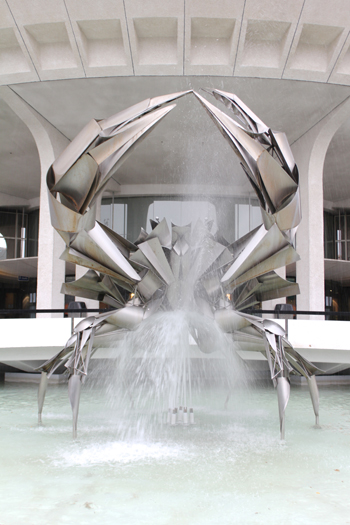
Sculpture George Norris': 'The Crab' caught in Trap of digital camera imagery

 The basic 'professional' camera in 1968 was a medium format camera, the 120mm variety, which produced 12  (2 1/4" by 2 1/4") square images per roll with a quality four times greater than the up and coming 35mm film with its rectangular images of 24 and 36 images per roll like my Canon F1.

Photo paper is rectangular therefore the 35mm was a close match to it whereas the 120mm required that the images be 'cropped' in the mind of the photographer during shooting.

This vertical image of welder Gus Lidberg, 'The Crab', and Sculpturer George Norris.  Cropped on either side of a medium format camera?


Post Media - Regina Leader

This photo?  Cropped top and bottom.

*************************


In 1971 I was using a Koni Rapid Omega for weddings after falling afoul of the square formatted Yashica camera.  The Koni Rapid Omega Rangefinder:  120mm film, 10 images @ 2 1/4" X 2 3/4" (6 X 7), the same proportion as print papers: 16 X 20 and 8 X 10.  Heavy camera, but simple to use.)

It was with the ease of the Leaf shutter in the lens that garnered me a once in a lifetime photo of 'The Crab'. 

  • Big and bright viewfinder
    Grabbing focus with that big bright rangefinder is easy
  • Large negative size
  • Large comfortable handle
  • Leaf shutter in the lens
  • Easy to find 120 film
    there are 220 film backs available for some models and 220 film isn’t so readily available
  • Built like a tank
  • Three accessory shoes on top of the camera

Result? 

Works for me


***********************
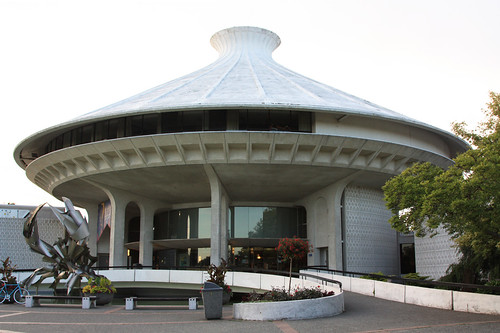
Today's images are typical, and aplenty.  A variety of a large building, small Crab vs large Crab, small building with most photos taken during daylight.  Must have something to do with the hours of opening of the Planetarium.


Google Search Criteria: Planetarium Crab
************************


https://farm4.static.flickr.com/3516/3809785174_040b6ce89f.jpg
 
**************************

http://ounodesign.com/2009/08/10/planetarium/

**************************


Page 6 of 41

"The Crab" sculpture and Museum of Vancouver Planetarium
1100 Chestnut Street

According to the City of Vancouver's Public Art Registry, "the crab represents the Indian legend of the crab as the guardian of the harbour and was also the zodiac sign at the time of the Canadian Centennial."  the stainless steel sculpture  was actually constructed in the south False Creek area, and then transported by barge to its present location.  Interestingly, the funds were raised by the women's sub-committee of the Vancouver Centennial Committee by hosting fashion shows and various luncheons.

It's a striking piece of public art that definitely holds its own presence against the retro-futuristic lines of the Museum of Vancouver/Planetarium.  The museum/planetarium's distinctive roof is an illusion to the woven basket designs created by the First Nations citizens who were able to leave a legacy -- what will be ours?
Sculpture George A. Norris'

Monday, June 3, 2019

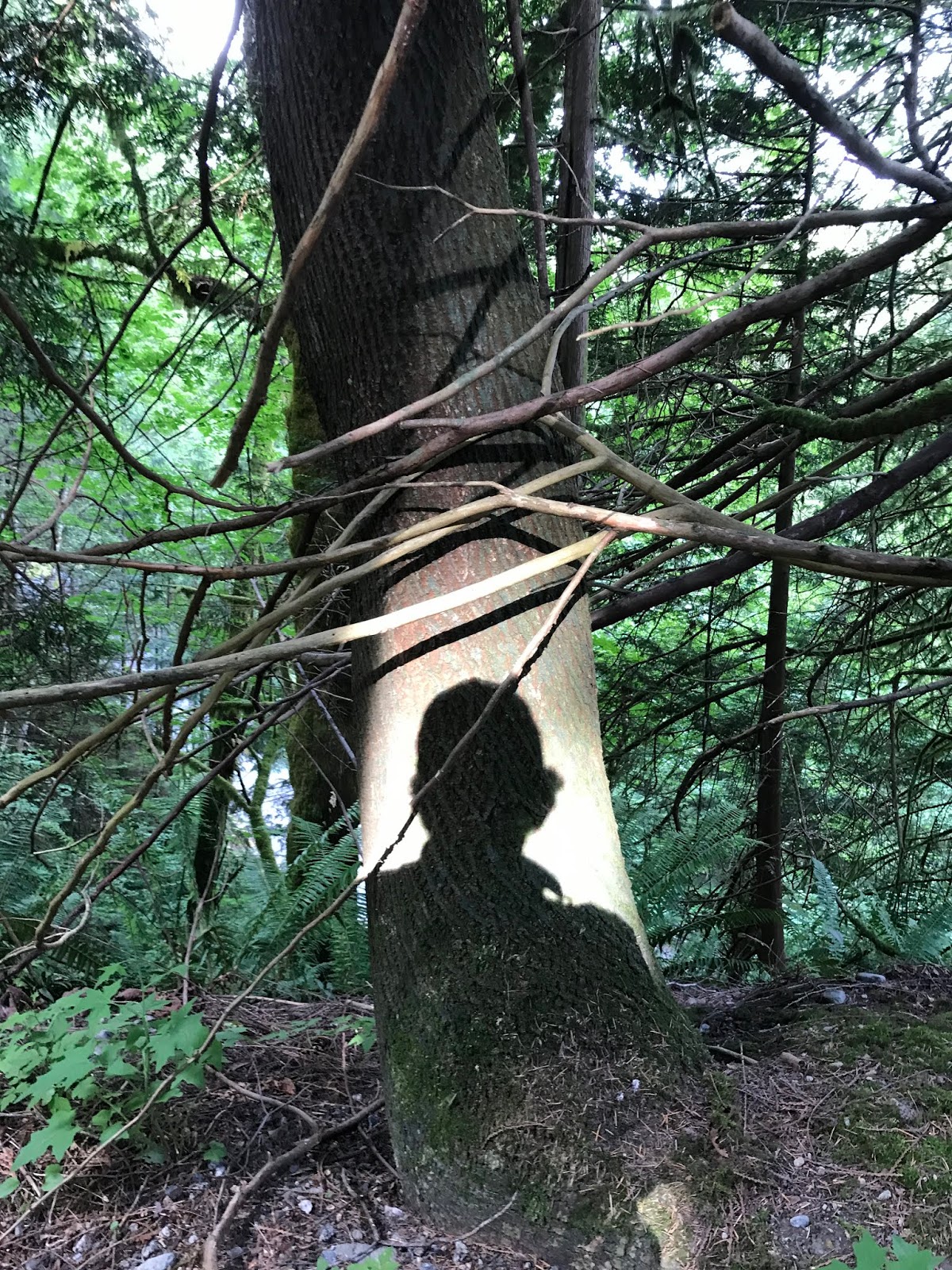
The Tree and Me were 'planted' in the 1940's. We are but a shadow now, of 'ourselves'


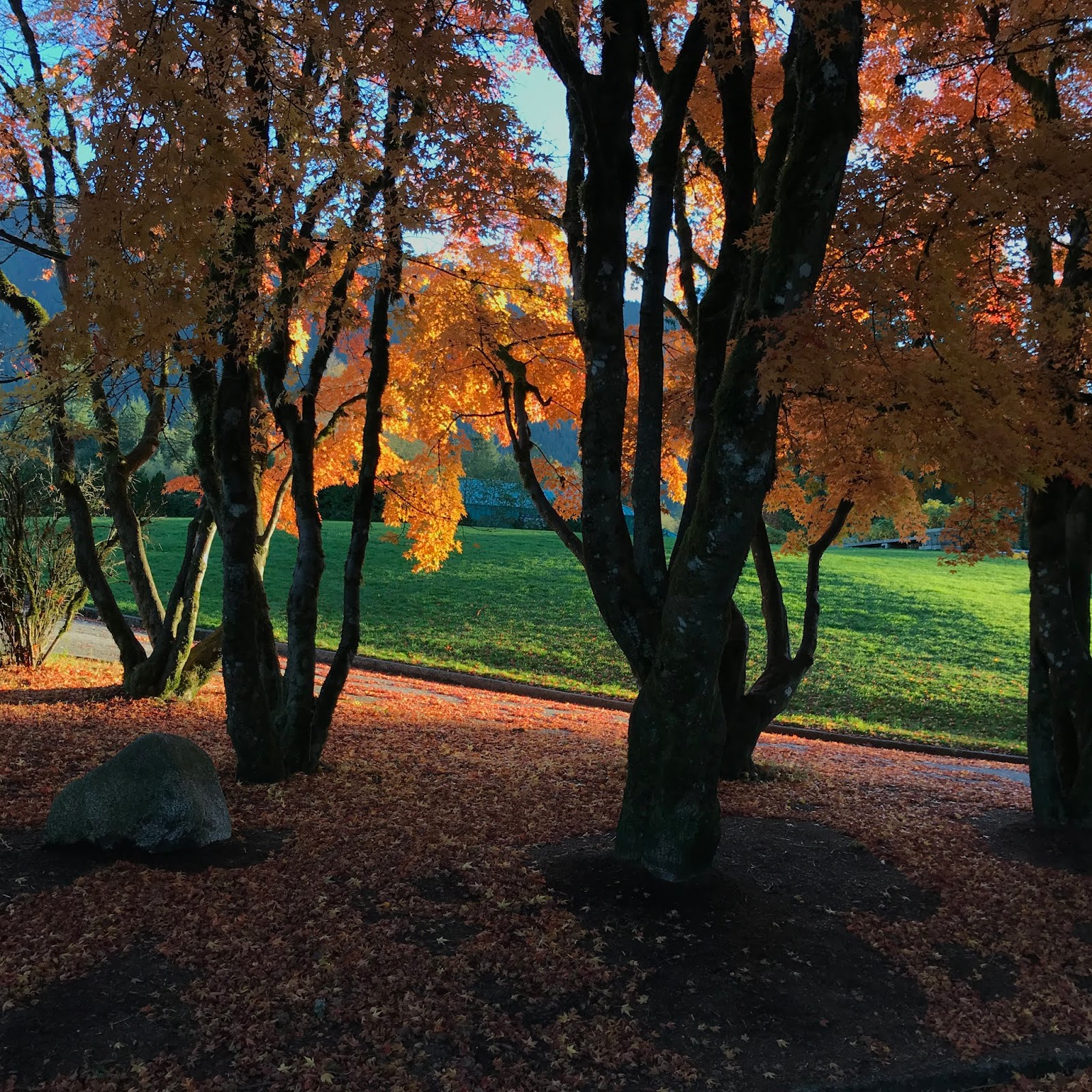
This morning's walk in Capilano River Regional Park ...
   
                I found a tree in the woods that looks just like me


 ****************


January 19, 2019
Just a walk in the same park: Cleveland Dam


Tuesday, May 21, 2019

"The penalty of $25.00 is an inducement to the possessor to consume the liquor as rapidly as he knows that if only charged with being drunk he escapes with a fine of $5.00 only."

1913 to 1916

Royal Commission on Indian Affairs for the Province of British Columbia (Canada), White, Nathaniel Whitworth, 1837-1917., McKenna, J. A. J. (James Andrew Joseph), 1862-1919., Carmichael, Saumanez, Shaw, J. P., MacDowall, D. H. (Day Hort), 1850-1927, McBride, Richard, Sir, 1870-1917

 
http://www.llbc.leg.bc.ca/public/pubdocs/bcdocs_rc/326024/326024_rc_indian_affairs_confidential_report.pdf

Page 28 of 30

....... Frequently at meetings of the different Indian Bands the question of fines imposed on Indians under the clauses of the Indian act relating to liquor have been discussed, and Mr. George Jay, Police Magistrate for the County of Victoria and also Stipendiary Magistrate for the County of Victoria, which includes the several Indian Reservations situate in Saanich, Esquimalt and Sooke Districts, has made the following statement and suggestion to the Commission:-

"Under the terms of the Indian Act, Sec. 137,"an Indian who is found in a state of intoxication is liable to a fine of not less than $5.00.  In those cases in which an Indian is found in possession of an intoxicant it is usually confined to a bottle of whiskey or gin, and sometimes only a small flask.

The penalty of $25.00 is an inducement to the possessor to consume the liquor as rapidly as he knows that if only charged with being drunk he escapes with a fine of $5.00 only.

The penalty of $25.00 was fixed by Statute some years ago at a time when it was a practice amongst a certain class to supply large quantities of liquor to Indians in remote Reservations.

With regard to fines for being under the influence of intoxicating liquor, it frequently happens that an Indian appears in the Police Court at the same time as white men charged with the same offence.  The practice for many years here has been in the case of those other than Indians to impose a fine of $2.00 for a first offence and a slightly increased fine in the case to the second or subsequent offence, but with regard to the Indians a Magistrate has no alternative but to impose the minimum fine of $5.00, which must to the Indian appear to be a marked discrimination against him.

I would respectfully recommend that the Indian Act be amended with regard to the penalties for those offences by allowing Magistrates wider discretion and by eliminating the provisions as to minimum fines, thus leaving it to the judgment of the Magistrate dealing with the offence to impose such fine as may in his opinion be proper, not exceeding, of course, the maximum fine provided in the Act.

I may add that I have resided at Victoria for the past 45 years and have had much experience of the habits of the Indians of the southern portion of Vancouver Island and the Islands of the Gulf.

Your Commission are of the opinion that, were these suggestions followed, it would tend to remove from the Indian the feeling that he is looked down on with contempt and his race deemed unworthy of being treated in a manner similar to other British subjects in His Majesty's Dominions, and that the greater latitude allowed Magistrates in their discretion, would have a tendency to elevate rather than debase the Indian."

And of course, the politicians chose to keep it just the way it was, because they hadn't finished plundering the First Nation People and their possessions.

Saturday, April 20, 2019

Willard A. "Podunk" Davis, recipient of the Medal of Bravery for saving the life of Nurse Warburton

Eight years ago, while rummaging through the North Vancouver Archives' newspaper "division" we came across this article:

The Review - North Vancouver - 1927


 Royal BC Museum:  Medal of Bravery recipient

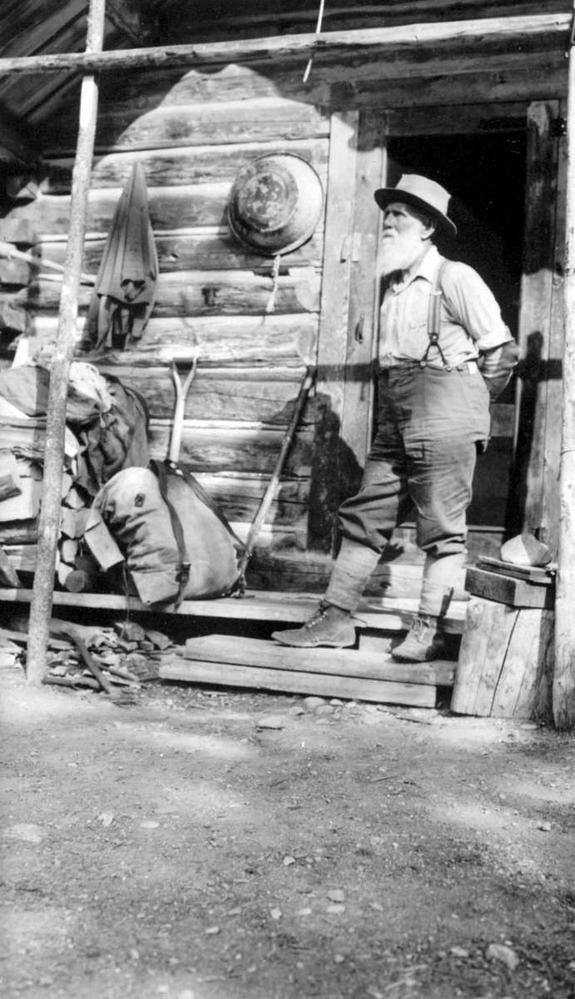
Willard A. 'Podunk' Davis

BC Archives

The editor of The Summerland Review has asked for a little information in respect to "Podunk" Davis.  His first query is on behalf of a lady admirer of "Podunk's" heroism, residing in Port Alberni, and concerns his financial rating.  She thinks that while the medal for bravery may be alright, his circumstances may be such that a more tangible expression of appreciation might not be out of place, and generously offers to contribute if steps should be taken to raise a fund in his behalf.  The second question is prompted by the editor's own curiosity and has to do with how Mr. Davis came by the nickname "Podunk."

Snip

.... the sheriff gave all the credit to the boy (ten or eleven), referring to him as "Podunk" Davis.  The allusion was to "Deadwood Dick," familiarly known to the miners, for whom he had rendered some splendid service in the detective line, as "Podunk."  Sheriff Simdback had been reading of the exploits of "Podunk," hence the soubriquet which he attached to his little accomplice -- one which has stuck for a half century.

Mr. Davis appeared to have a very clear recollection of all the circumstances of the case.  The burglars, whose names were Lindemyer and Stull, received long terms of imprisonment.  Henry Day was the name of the jeweler, whose store had been robbed, and "Podunk" still cherishes a ruby and ring with which he rewarded him for the recovery of the stolen goods.

+++++++++++++++++++++++++

Vancouver As It Was
https://vanasitwas.wordpress.com/2016/12/03/fates-temptress/

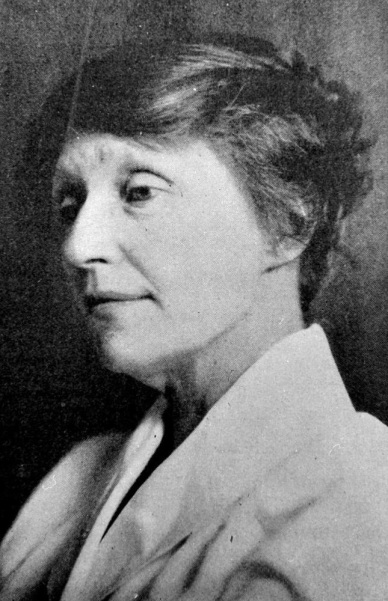
Nurse Mary Warburton

 
Mary Warburton (ca1871-1931) was a Vancouver nurse with a penchant for walking where she needed to go, regardless of distance or season. Two of her trips were reported in the news – one from Hope to Princeton in 1926; the other from Squamish to Princeton in 1931. Both trips were made in autumn.

On August 25, 1926, Warburton, age 56, left Hope for Princeton, a 65-mile journey. On foot. According to the account of Warburton’s trip as related by Michael Kluckner, she had finished a lengthy nursing stint with a terminally-ill patient and was heading to the Okanagan to take a working vacation as a fruit picker. She set out wearing a light khaki hiking outfit and supplied with food which would last four days: “4 packets of RyeCrisp, a half pound each of bacon, butter, and cheese, a pound of raisins, 2 oz. of almonds and some tea. . . . A frying pan, a billy [cooking pot], a spoon and a single-bladed pocket knife, plus a sketch map of the area and a compass, completed her it.”


The Search for Mary Warburton  - Michael Kluckner  
On September 16, three weeks after she'd last been seen, a four-inch snowfall covered the mountains. Eventually, after becoming hopelessly lost in the Paradise Valley area, she stumbled onto the cabin -- "a rough cedar slab shelter"--of a Princeton old timer known as Willard Alfred "Podunk" Davis.  He had left matches inside a piece of paper in a tobacco tin in the cabin. Desperately wet and cold, she lit a fire but managed to set the shack alight. Evidence of the recently burned cabin rekindled the search for her (sorry about the pun), and eventually she was found by Davis and Const. Dougherty of the Provincial Police.


Google Search Criteria:  Podunk Davis


UBC Historical Collections

"...... It (Concord) was driven by Mr. W. A. (Podunk) Davis, who says he is a mere chee-chako who came to the Similkameen in '85.  ......"

Page 23:  1905 Concord built by Henderson & Sons of Stockton, Calif, used only on the Penticton - Hedley route and later through Princeton.

Wheels that won the West
 chee-chako: a person newly arrived in the mining districts of Alaska or northwestern Canada.

 **************
***********

E. C. Manning Park ....

Dewdney Trail

Photo of Dewdney trail near Daddy's Pond Edgar Dewdney constructed this heritage trail in 1860 on the request of Governor Douglas. This trail was originally called “Mule Road to the Similkameen” and later known as the “Canyon Trail”.

The left fork or Warburton Trail is a 6km loop trail ending at the Tulameen horse camp. On this portion you will gain some elevation and you will see the last remaining building of the old Evans family cow camp. The family used to run cattle through here in the 1950’s. Warburton horse camp is located 3km from Snass View camp. The cabin was built and donated by Chuck Chesnut around 1980. The camp and prominent peak is named after nurse Warburton who after being lost for 7 days was found by Willard A. Davis aka “Podunk Davis”.  A further 3km brings you to the Tulameen horse camp where Snass Mt. at 2310m can be seen to the south.


Monday, April 8, 2019

Ironic? Canada spent $1 Billion for a new RCMP provincial headquarters in Surrey which is now severing the RCMP

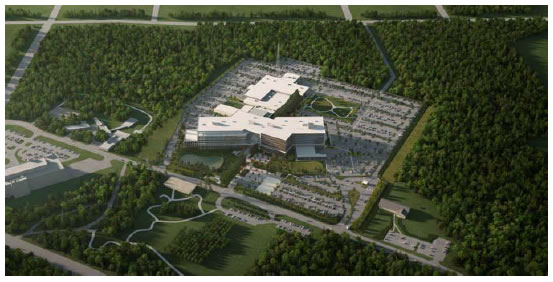
The 2013 built, New and Improved RCMP "E" Division headquarters, with a price tag of $1,000,000,000, housing 2,700 employees, had to be located somewhere, locally, to serve Metro Vancouver (except Vancouver), British Columbia, and Canada.

 Surrey!
2018  Municipal election result:
The City of Surrey has appointed a new manager to lead its transition from using the RCMP to a city-run police force — one of the first details Mayor Doug McCallum has offered into how the change will look.-  CBC


***************************

CBC:

***************

Will the RCMP Headquarters be providing space for the independent law enforcement agency?  Has Surrey Council made their own arrangements?
-------------------------------------------------
Backgrounder

Google Search Criteria:  Surrey RCMP 
RCMP is getting ready to move into its new $1 billion headquarters in Surrey, federal Public Safety Minister Vic Toews announced on Tuesday. About 2,700 RCMP employees from 25 different "E " Division units will start moving into the new facility this month according B.C.'s Commanding Officer, Craig Callens (Retd).  Jan 8, 2013.
 **********

 2017

The RCMP is pleased to announce that Assistant Commissioner Brenda Butterworth-Carr has been appointed as the Commanding Officer for the RCMP in British Columbia, following a selection process jointly undertaken by the RCMP and the Province. Assistant Commissioner Butterworth-Carr replaces Deputy Commissioner Craig J. Callens, who is retiring after 32 years in the service of Canadians, including five years as Commanding Officer.


Royal Canadian Mounted Police Headquarters info

  • The RCMP ‘E’ Division Headquarters Relocation Project is considered a major Crown initiative that relocated and consolidate existing RCMP headquarters units throughout Metro Vancouver to a new site in the City of Surrey.
  • The project is a public-private partnership (P3) between the Government of Canada and Green Timbers Accommodation Partners and represents PWGSC's largest federal accommodation project in Pacific Region to date and the first P3 for the Government of Canada.
  • The new 76,162 square-metre facility meets current safety and security standards and provides office and purpose built accommodation for over 2,700 ‘E’ Division Headquarters personnel.

PS:   SNC-Lavalin did NOT build this facility